
Research Note 7: The Telephone and the Monkey Puzzle Tree
I don’t think I have a particular artistic style, not in the way that the great painters and artists of the past did. I doubt anyone looking at one of my films would immediately say, That must be a McClean. 🤔
If there is something that connects the work I make, and have made in the past, it may simply be that I am drawn to things that have been remembered, carried forward or somehow come through. Stories told aloud. Objects that have absorbed the evidence of their use. Small, unofficial archives that were never intended to become archives at all.
In my father’s generation, storytelling seemed to be woven into ordinary life. Old tricks played on neighbours, local incidents, family connections and stories from years before were told and retold until they became part of a shared memory. My father had many such stories and could tell them repeatedly, laughing each time as though he were hearing them afresh.
Much of this storytelling happened simply through visiting. When I was a young girl, I sometimes went with Dad in the evening when he called on friends and neighbours. Back home, this was called going on your ceilidh. People sat around firesides and talked, politics, in my father’s case, but also family, neighbours, who had married whom, who had gone away, who had come home. Stories, books, newspaper cuttings and bits of news moved from one house to another.
Not everyone had a telephone then either.
When we lived in the middle of Beragh village, on Main Street, we rented a house from a former headmaster who already had a phone installed. The number was Beragh 343. As children, when we lifted the receiver, we were taught to say:
Hello, Beragh 343.
Neighbours sometimes came into the hallway holding a few coins and asked whether they could use the phone.
When we moved up the street to the house at the top of the town, the telephone number came with us. We were still Beragh 343. My father had the ingenious idea of attaching the telephone to a wooden board fitted into a hole cut in the wall between the kitchen and his tiny shoebox of an office. The board could swivel, allowing the telephone to move from one room to the other.
Dad had connections in Belfast and further afield, and people called him at all hours to talk. He did not drink alcohol himself, but there were many nights when he held long conversations with men who were under the influence. Dad listening, while they talked. I found this fascinating. What could they be talking about for so long?
As we grew older, the telephone became important to us children too. School friends called, along with interested boyfriends or girlfriends. I remember being so embarrassed when someone rang to speak to me because there was almost no privacy. If Dad was not in his office, you could swivel the telephone through the wall and take the call in there. If he was in the office and Mum was in the kitchen, there was no way around it. The conversation became short and sweet.
The wooden board behind the telephone gradually became covered in writing. Names, telephone numbers, doodles, calculations and passing marks accumulated across its surface in biro, marker and even Tipp-Ex — whatever happened to be close at hand. Mum also wrote down the dates on which she changed the Calor gas cylinders used for the cooker.
Those dates seem very ordinary, but they record something too: kettles boiled, dinners made, a household moving through time. The board became a record of daily life without anyone deciding that it should be one.
I filmed it when I made Movements Recollected in 1999. As a hand swivels the telephone board, my voice-over says, “And the telephone moved from one room to the other.” It always gets a laugh.
Looking at the telephone now, I realise that my life has spanned a change in how we communicate and how we inhabit the world around us. A telephone once belonged to a place. You had to be there when it rang. Conversations took place mostly in our kitchen at home or, in my dad’s case, in his small office. Communication was still tied to place, and so was visiting: you had to physically go somewhere and sit for a while. The technology changed, but so did our habits around it — how we waited, spoke and spent time together.
None of this was recorded. No one was asking who had gone on their ceilidh that evening, what was said, or where the conversation might have led.
Nearly fifty-five years later, I would love to read a transcript of a conversation between Frank McElroy and my father in the early 1970s, when I sat quietly in the corner of the sitting room and listened.
I remember another evening, years later, when I took my ageing parents to visit my father’s sister and her husband. As the evening progressed, one yarn following another, I realised that the light outside was fading. No one else seemed to notice.
I looked through the window and watched the giant monkey puzzle tree in the garden slowly disappear into the darkness. Eventually, the only light I could see in the room came from the glowing tip of my uncle’s cigarette.
see also:
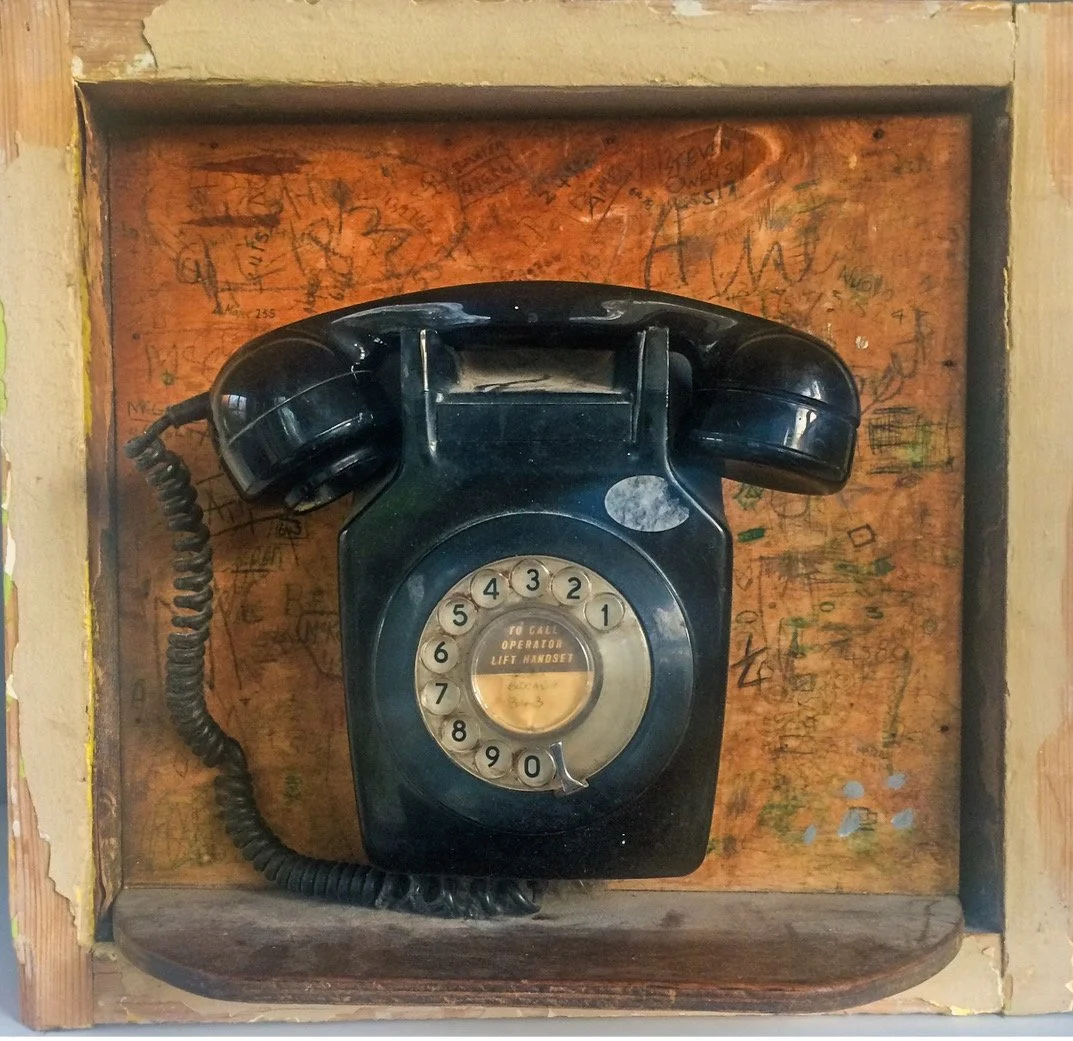
Beragh 343 | McClean Family Telephone - 1969-2012©️