Research Note 5: Times Own Duration
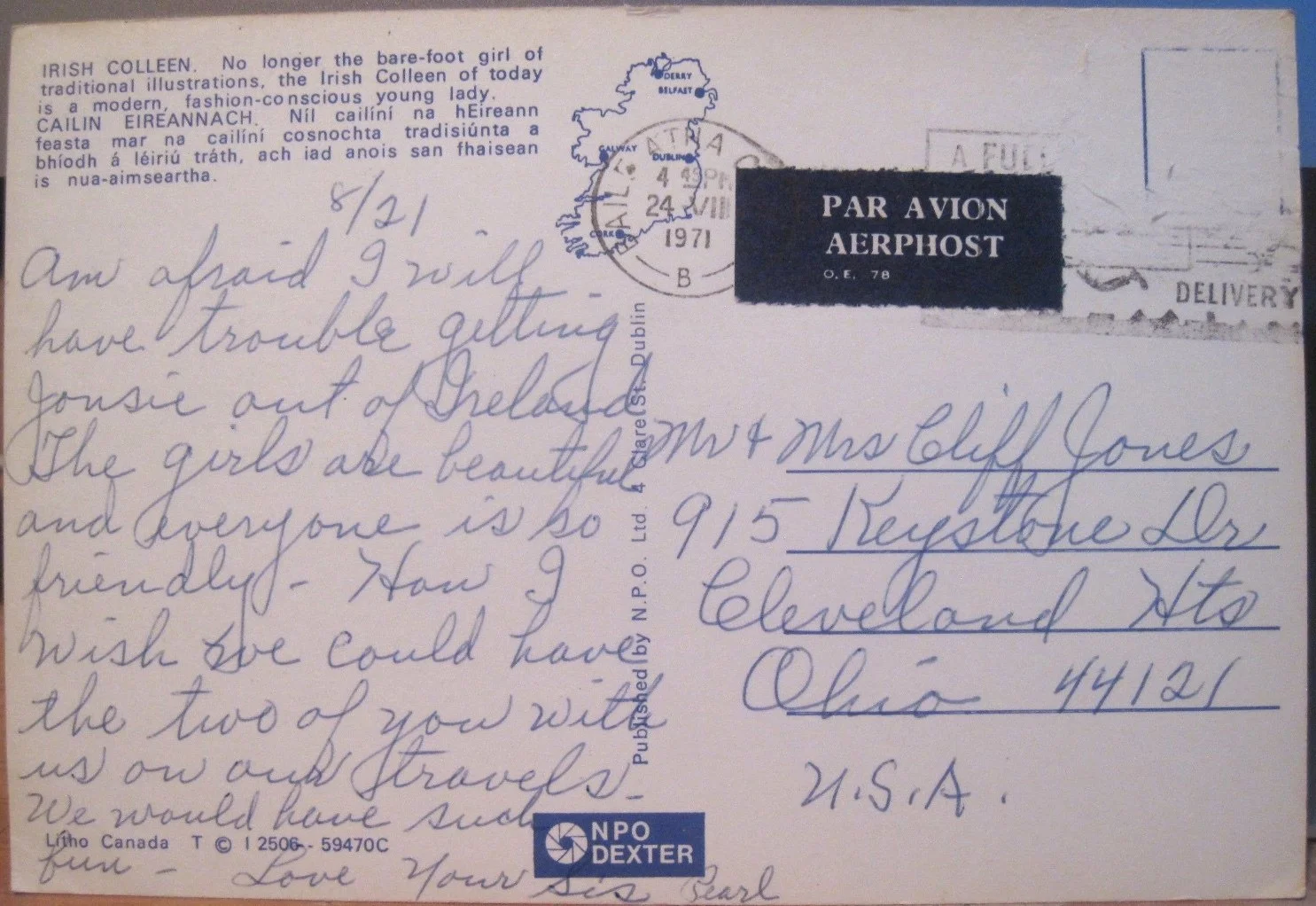
The small line drawing I use for the research notes section of this website, a woman with a red neck scarf and green skirt, comes from a postcard image I first came across in the early 1990s. The caption on the back reads:
IRISH COLLEEN. No longer the bare-footed girl of traditional illustrations, the Irish Colleen of today is a modern fashion-conscious young lady.
I used this image when I was asked to contribute to Die eigene Dauer der Jahre / Time’s Own Duration, a book project published in Bremen in 1999. The project invited artists to think about time over a ten-year period, asking how an idea might develop, pause, alter, or return across the span of years.
What interests me now is the realisation that the postcard which attracted my attention back then had already changed by the time I came across it. Not physically, the image itself had stayed the same, but culturally. The “modern fashion-conscious young lady” was no longer modern to my eyes. Her clothes, pose and the colours she wore had become signs of another time, one that brought me back to my childhood.
When I looked at the German publication recently, and at my own entry in black and white, I thought again about this image, this depiction of an Irish woman. I don’t have the original colour postcard, so I went on an online hunt and, hey presto, I found one on eBay and bought it. This one had been sent from Ireland to the USA in August 1971. On the back, someone had written about how beautiful the Irish girls were and how friendly everyone was — and it hits me. The postmark is stamped in Dublin. One hundred miles north, my father is in a prison hospital in Belfast, recovering after being interrogated and beaten. At that moment, he is one of eleven men singled out for “special treatment” in the internment round-up of August 1971: Operation Demetrius. I am five years old.
I look back at my line drawing of the woman with the red neck scarf and green mini skirt, and a voice floats up from the radio talking about Carl Jung’s idea of the shadow self. The quiet bodily outline in the background of the drawing seems to have appeared even before I knew she was there. The radio voice babbles on about how the shadow self is the part of ourselves we avoid, repress, or fail to recognise, but may also hold hidden reserves of energy, understanding and growth. The shadow was already there in my drawing, waiting for me to catch up with it.
Looking again at the original caption on the postcard, and how keen and jolly it sounds in its description of the Irish Colleen as “a modern, fashion-conscious young lady”, I think my drawing may have different concerns. This Colleen may still see herself as modern. She may even still be preoccupied with fashion. But she also has the difficult business of understanding herself on her mind — not as she is seen, posed or captioned by others, but as she appears to herself, shadow and all.
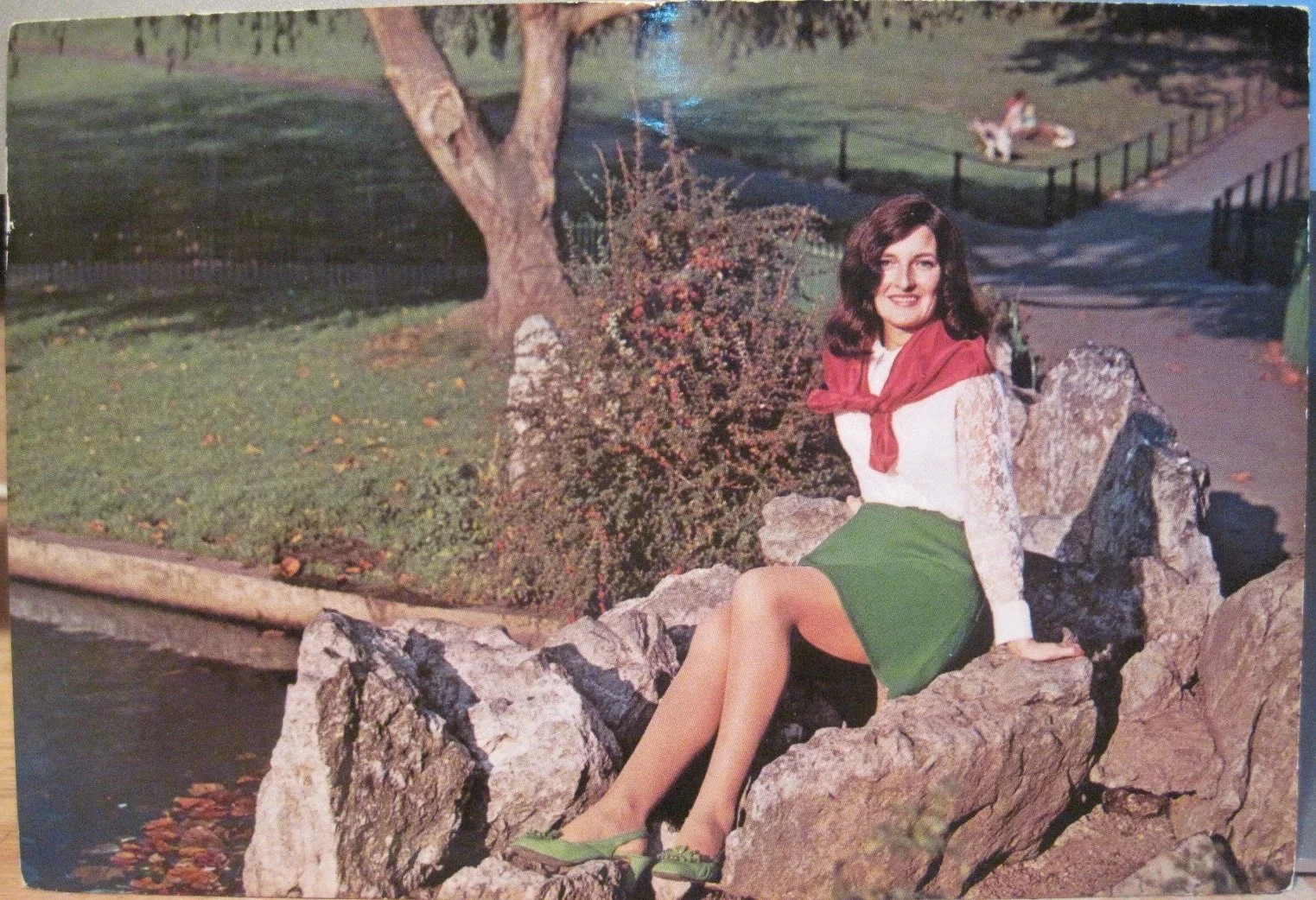
Postcard: Irish Coleen, Published by N.P.O Ltd, Clare Street, Dublin©️